Neon slingshot skating: arcade runs driven by timing and momentum
Sling Skaters, from etermax, is an endless skating runner that replaces swipes with an elastic slingshot motion for propulsion. Players pull and release to fling a skater through procedurally generated, neon-lit city courses, timing launches to dodge obstacles and trigger speed boosts. The game pairs one-tap controls with a speed-rush system, unlockable characters and boards, and global leaderboards. It targets casual mobile players who prefer short, high-energy sessions and competitive score chasing.
What kind of game is it?
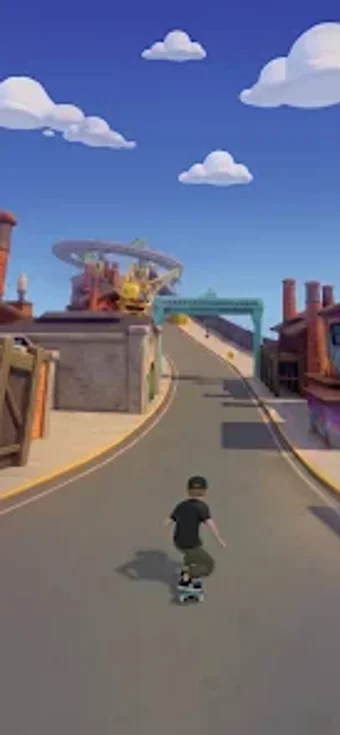
Think of a mobile endless runner that swaps standard swipe movement for a physics-driven pull-and-release control. The core loop centers on launching a skater, holding momentum, and navigating twisting streets while avoiding barriers and traffic cones. Procedural urban courses produce varied layouts each run, and the focus on high-speed traversal means runs favor dexterity and timing over route memorization.
How the sling mechanic shapes play and progression
The sling launch is the game’s defining system, a physics-based input where precision timing determines speed and trajectory. The speed rush system rewards sustained momentum by unlocking brief high-speed dashes, and coins collected during runs unlock characters, boards, and trail effects. Matches are inherently single-player but include leaderboards for competitive comparison, so progression emphasizes cosmetic unlocks and higher-distance scores rather than levels or narrative advancement.
What does the game look and feel like?
The aesthetic leans into a neon urban palette with stylized cityscapes and bright trail effects that highlight velocity. Visual trails and board effects make it easier to perceive speed during frantic sequences, while the one-tap interface reduces control clutter for touch screens. The presentation frames each run as an arcade sprint, with bold contrast and clear obstacle silhouettes that keep focus on timing and movement decisions.
How long does it take to master, and why you’ll return
Mastery skews toward skill acquisition: players adapt to aiming arcs and release timing rather than learning fixed obstacle patterns. Procedural generation and the leaderboard loop encourage repeated runs, and early reports note responsive controls and satisfying sling feedback, which supports replay. The game suits brief sessions for score improvement, and longer play for those chasing incremental cosmetic unlocks and personal bests.
In summary, it rewards technical runs and competitive bursts
The game is a solid match for players who enjoy quick, technique-driven arcade sessions and score-focused competition. It asks for precise timing rather than long-term story investment, so it less suits players seeking cooperative or narrative-rich experiences. For anyone who prefers high-speed short runs and cosmetic progression, it provides a repeatable, skill-based arcade challenge.